

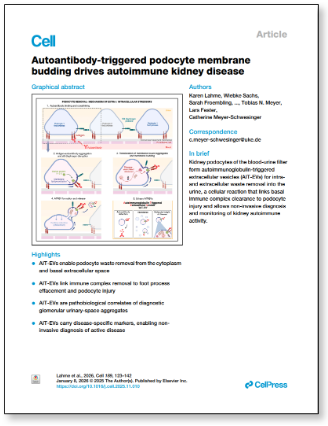
Chronic kidney disease affects about one in ten people globally, and damage to podocytes—the kidney’s specialized blood-filtering cells—is a central driver of disease progression. In membranous nephropathy, an autoimmune kidney disorder, circulating antibodies attack proteins on podocyte foot processes, disrupting the filtration barrier. We show that these antibodies form antigen–antibody aggregates on the podocyte membrane that are shed into the urine as distinct extracellular vesicles, termed autoimmunoglobulin-triggered extracellular vesicles (AIT-EVs). These vesicles contain pathogenic antibodies, their target antigens, and key podocyte proteins, reflecting an active mechanism to remove immune complexes and cellular stress. However, excessive release of AIT-EVs contributes to podocyte dysfunction and structural damage. Importantly, isolating AIT-EVs from urine enables detection and monitoring of disease-causing autoantibodies, pointing to a promising non-invasive diagnostic and therapeutic strategy for autoimmune kidney disease.
Stay In Touch